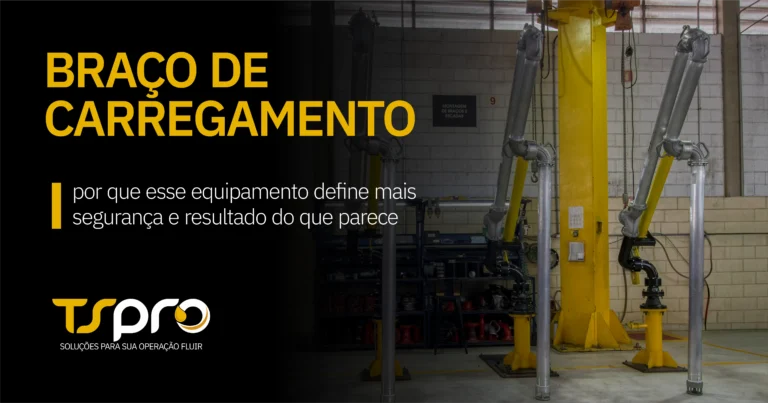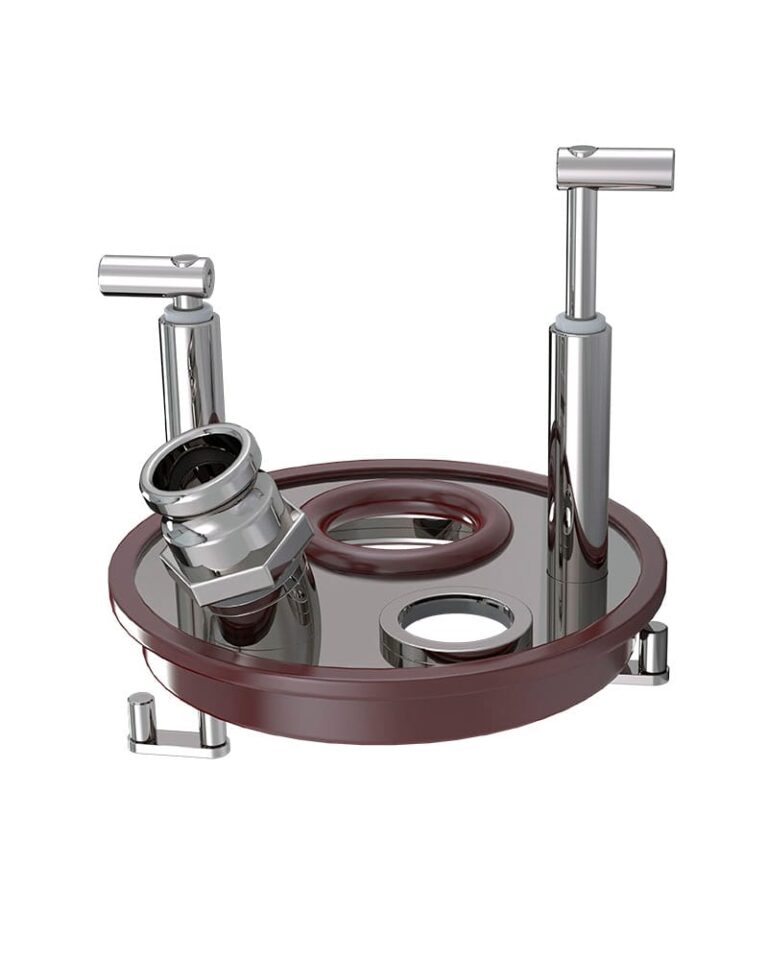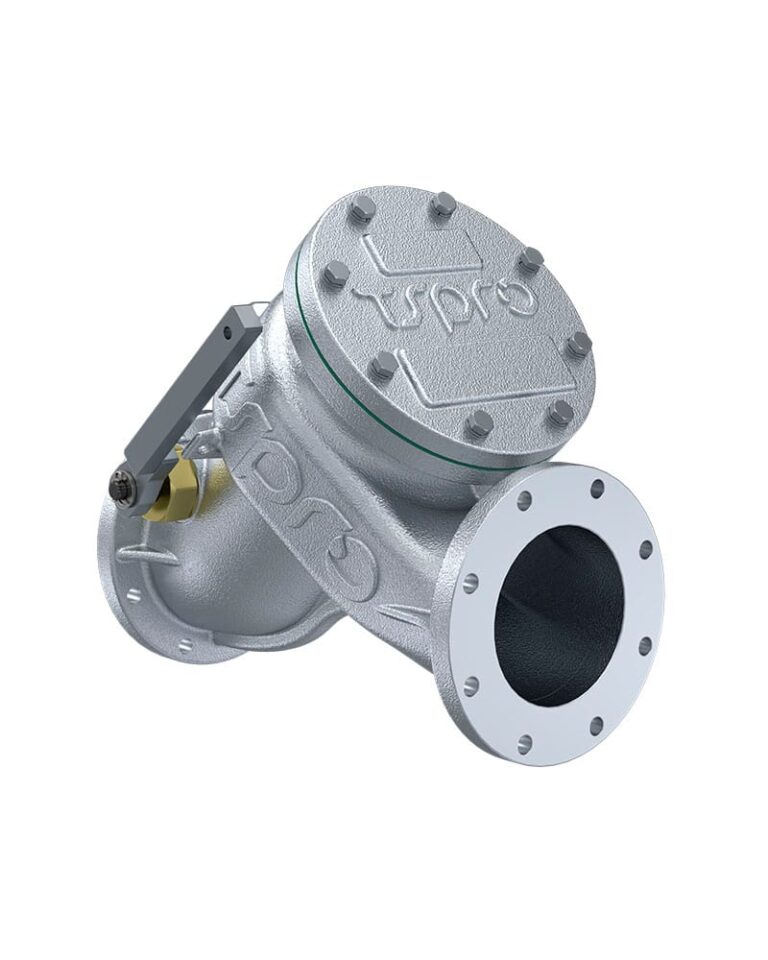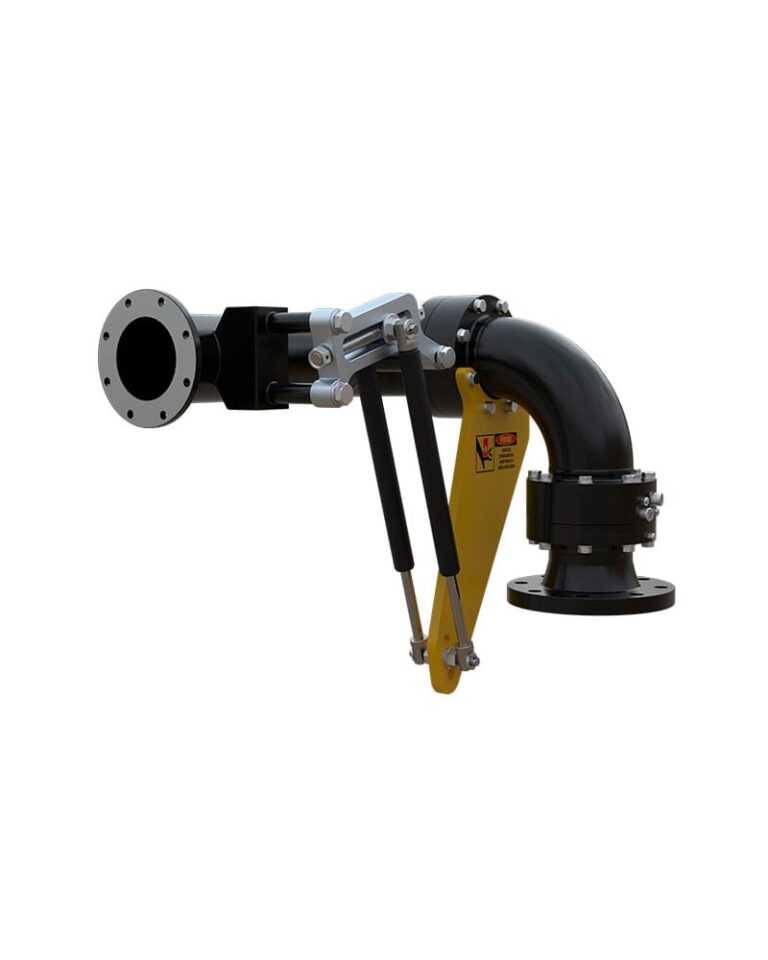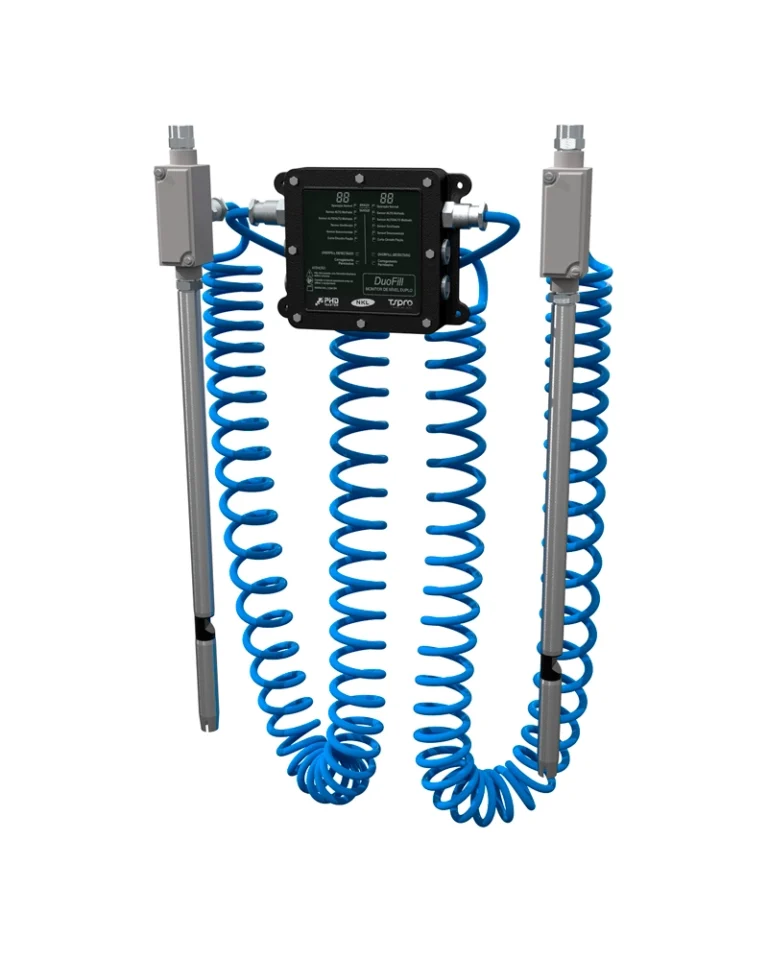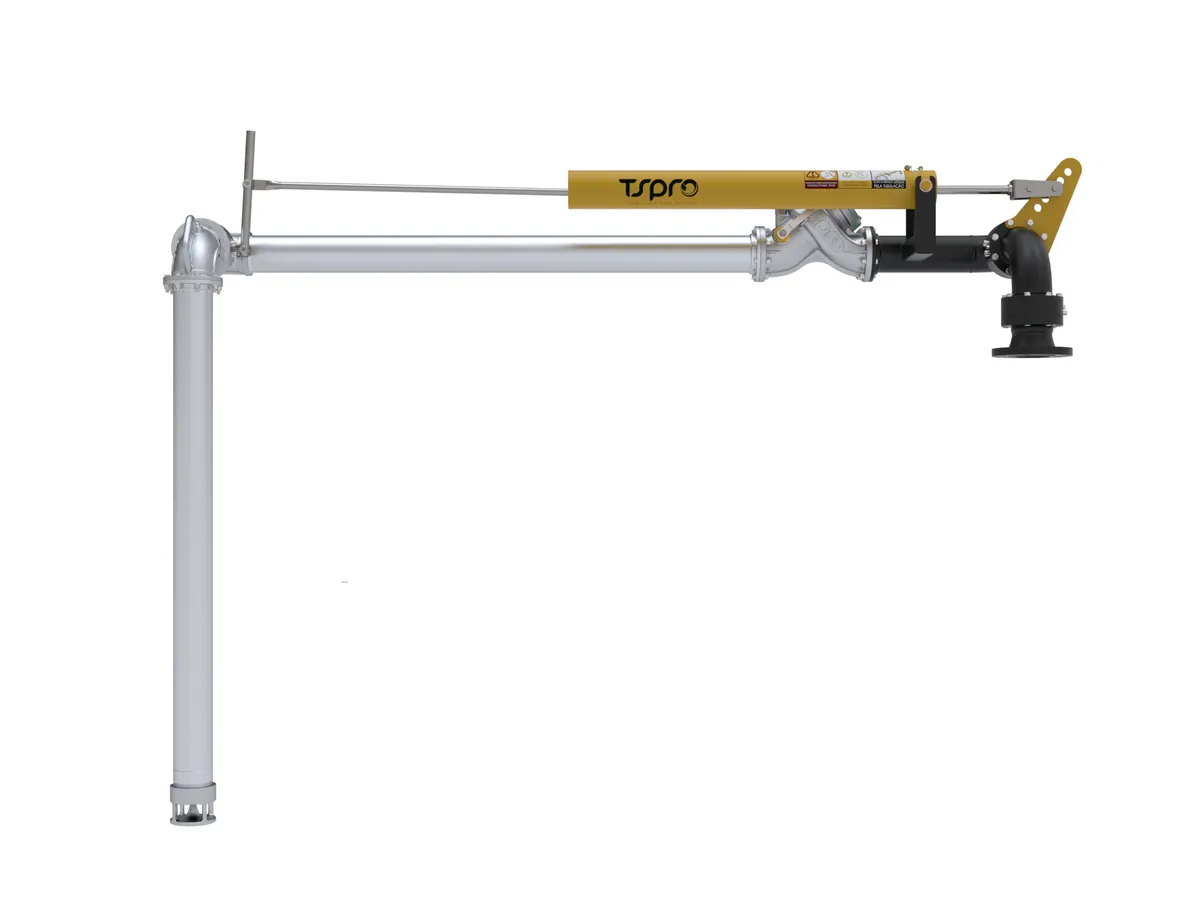
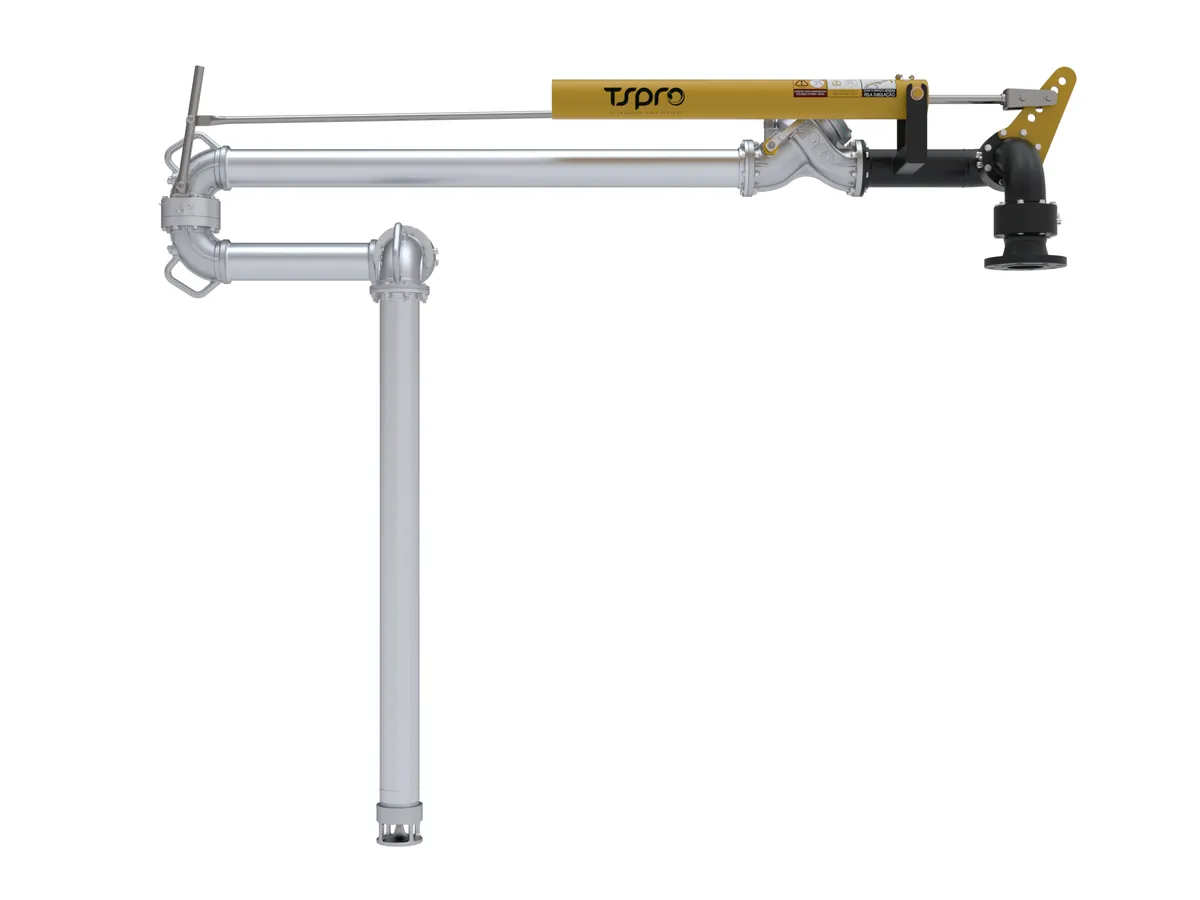
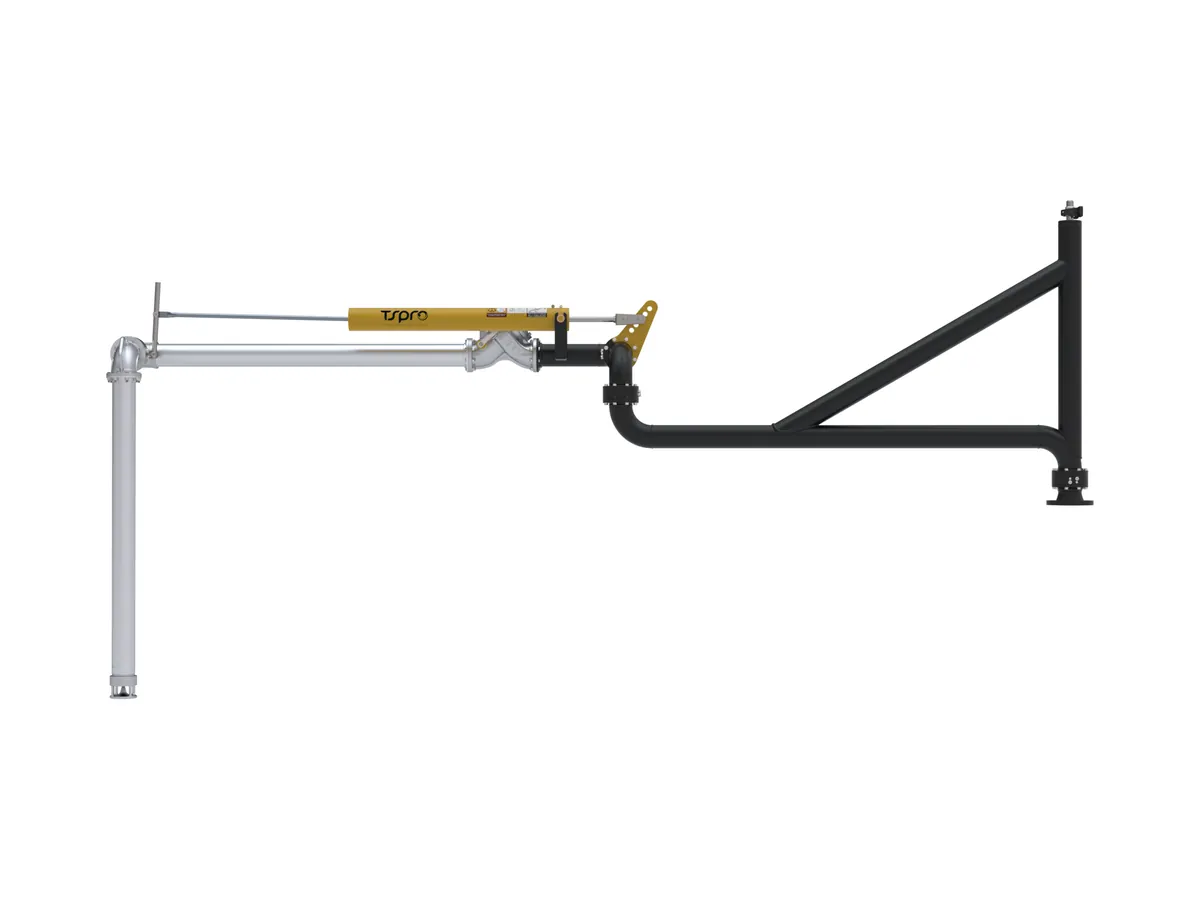
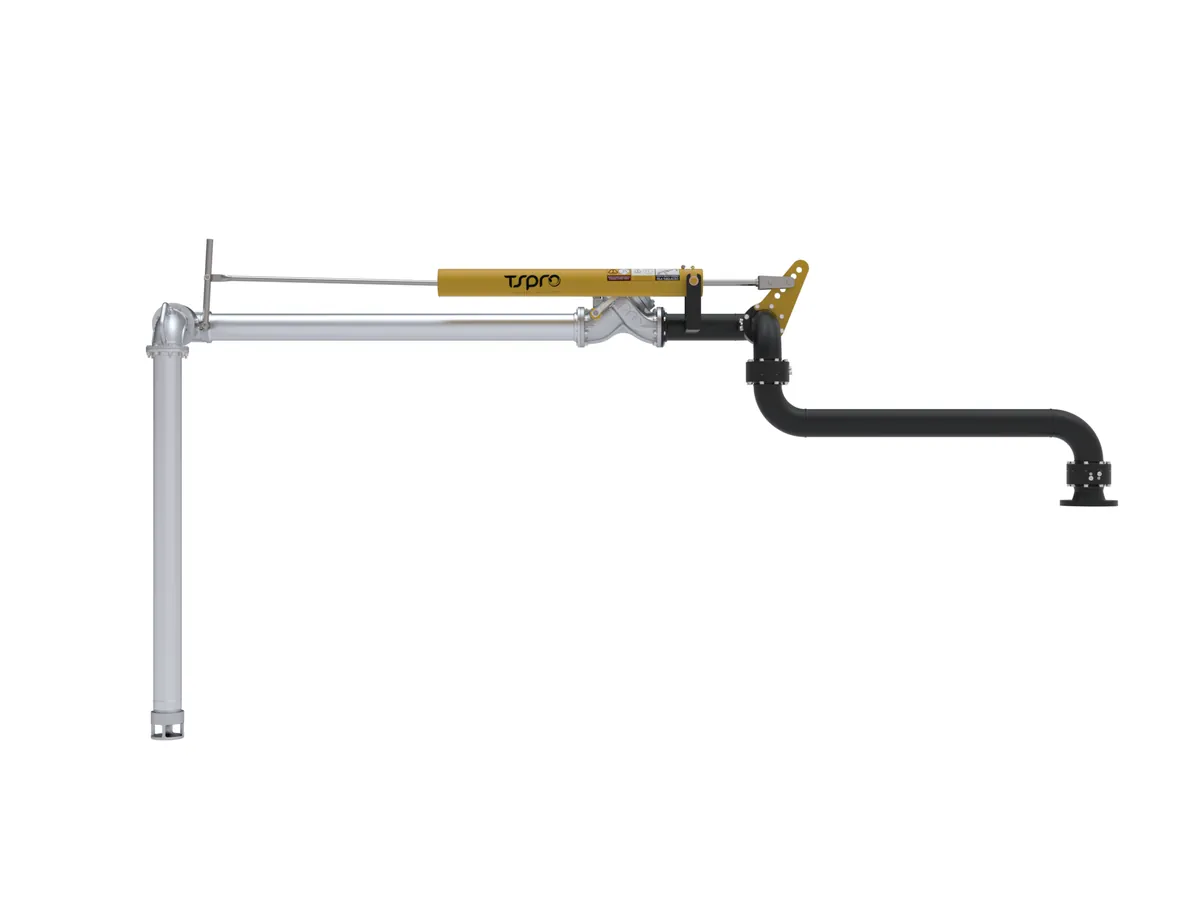
The TSPRO Top Loading Arm was developed to transfer fluids from the top of trucks and tank wagons, connecting the installation's product line directly to the compartment to be loaded. Its use replaces improvised solutions with hoses or spouts, providing greater control over the discharge point's positioning, less physical effort for the operator, and more agility during loading cycles. It is particularly suitable for terminals, distribution centers, and industrial facilities that handle hazardous or high-value liquids. All joints use modular swivel joints with double seals. When the first seal shows wear, an external indicator signals the need for intervention, while the second remains responsible for containing the product. This feature allows maintenance to be scheduled before a leak occurs. The three-part construction of the joints allows the seals to be replaced without removing the balls from the rotation track. In addition to reducing maintenance time, the system uses commercially available seals, simplifying spare parts management. The arm also incorporates an enclosed compression spring counterbalancing system with load adjustment. This mechanism facilitates equipment movement and allows for balance adjustment according to product density or the inclusion of accessories, without the need for special tools. Another differentiating factor is the electrical continuity between the arm's ends, maintained by the system developed in the TSPRO rotary joints. This technology has a patent pending and contributes to the control of electrostatic charges during the transfer of flammable liquids. Manufactured in Brazil, the equipment features material traceability, greater availability of spare parts, and national technical support. It can be supplied in different models, diameters, materials, and configurations, according to reach, fluid, and loading platform characteristics.
The code includes five pieces of information: type, model, diameter, seal, and material.
In the BTC-42CA example, BT is the top arm (top loading), C is the model, 4 is the 4-inch tubing, 2 is the Viton seal with hydraulic cardboard, and CA is the carbon steel and aluminum construction.
The top-loading models are A, C, E, and G. The other sealing options are 1 (Buna-N with hydraulic cardboard) and 3 (PTFE).
The piping ranges from 2 to 6 inches, depending on the model, and the construction can be in carbon steel, aluminum, or stainless steel.
Model A is available in 2", 3", 4", and 6"; model C in 3" and 4"; model E in 3", 4" and 6"; and model G in 3" and 4".
The materials are carbon steel and aluminum (CA), carbon steel (CC), carbon steel with 304 (C4) or 316 (C6) stainless steel, and 304 (I4) or 316 (I6) stainless steel. The seals can be made of Buna-N, Viton, or PTFE.
The choice depends on the fluid, because the compatibility of the seals and metal parts in contact with the product defines the safety of the operation. Inform TSPRO engineering of the fluid to determine the correct combination.
No: models A, E, and G allow for a steam intake lid, and model C is not suitable for this use.
When installing the cover, the additional weight may require a new adjustment of the counterbalance spring load. The manual describes this adjustment, which is done without special tools.
Joint lubrication should be done every six months, and seal replacement indicators should be checked.
To lubricate, use PTFE-based grease, consistency 1, on the greasing points, and rotate the arm a few times to spread the new grease.
If a seal replacement indicator is wet with product, replace it with a 1/8" NPT plug to prevent dripping and schedule seal replacement.
Before any service, relieve the pressure, drain the product, block the line, and replace the spring locking screw.
Each arm undergoes a hydrostatic test at 128 psi (9 kgf/cm²) and is welded by qualified welders.
The carbon steel components receive the standard TSPRO paint finish in black. TSPRO is ISO 9001 certified, and the equipment meets the requirements of NR-12.
The manual notes that the product's flow can generate static electricity and that grounding the equipment is necessary.
| Application | Top loading of trucks and tank wagons |
| Diameters | 2", 3", 4" and 6" |
| Materials | Carbon steel, aluminum, 304 stainless steel or 316 stainless steel |
| Seals | Buna-N, Viton or PTFE |
| Normative reference | Applicable requirements of NBR 17505 |
| Hydrostatic test | 128 psi — 9 kgf/cm² |
| Manufacturing | National |
| Speed in m/s | ||||||||||||||||||||||
|---|---|---|---|---|---|---|---|---|---|---|---|---|---|---|---|---|---|---|---|---|---|---|
| THE | LPM | |||||||||||||||||||||
| 400 | 600 | 800 | 1000 | 1250 | 1500 | 1750 | 2000 | 2250 | 2500 | 2750 | 3000 | 3250 | 3500 | 3750 | 4000 | 4500 | 5000 | 5500 | 6000 | 6500 | 7000 | |
| 2" | 3.1 | 4.6 | 6.1 | 7.7 | 9.6 | |||||||||||||||||
| 3" | 2.1 | 2.8 | 3.5 | 4.4 | 5.2 | 6.1 | 7 | 7.9 | 8.7 | |||||||||||||
| 4" | 2 | 2.5 | 3 | 3.5 | 4 | 4.5 | 5.1 | 5.6 | 6.1 | 6.6 | 7.1 | 7.6 | 8.1 | 9.1 | ||||||||
| 6" | 2 | 2.2 | 2.4 | 2.6 | 2.9 | 3.1 | 3.3 | 3.6 | 4 | 4.5 | 4.9 | 5.3 | 5.8 | 6.2 | ||||||||
← Swipe to the side to see all columns
Our engineering team provides support from the initial sizing to defining the ideal model