


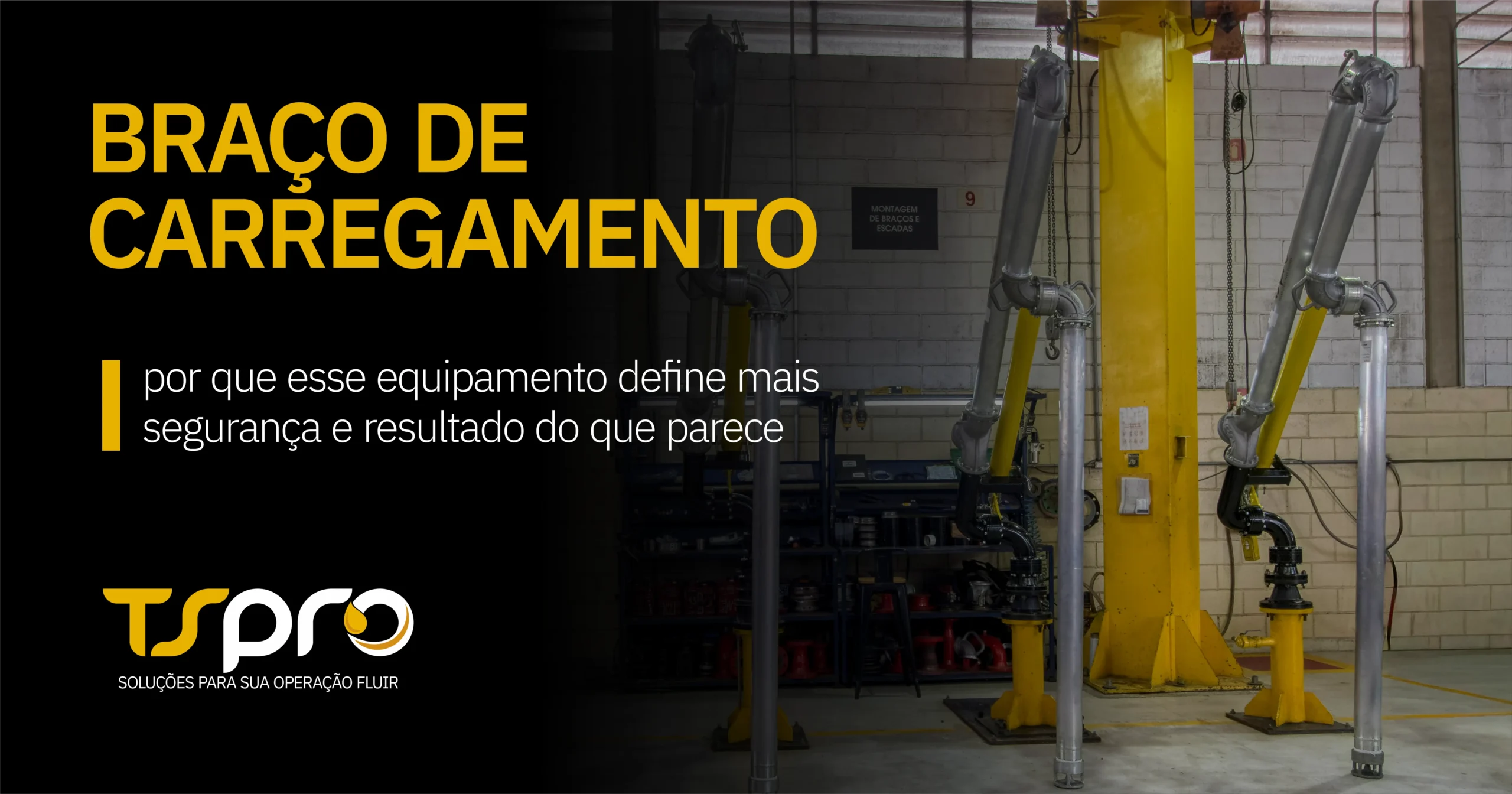
Loading arm maintenance: how to reduce downtime and leaks
In many industrial operations, the loading arm is treated as a technical item that simply "needs to work." But this interpretation is limited. Because, in practice, it affects much more than just product transfer. It affects ergonomics, sealing, maintenance, repair time, environmental risk, operational continuity, and the safety of the operation as a whole. The point is that this impact rarely appears explicitly at the beginning. It appears gradually. It appears when maintenance takes longer than it should. It appears when wear is only noticed after a leak. It appears when the operation depends on corrective intervention instead of working with predictability. It appears when the real cost emerges outside the purchase budget. This is why looking at the loading arm only as an acquisition item usually generates an incomplete calculation. In operations with hazardous fluids, seemingly simple decisions define safety, reliability, and continuity. And the loading arm is exactly at this point of convergence between engineering, operation, and risk. When the solution is well-designed, some effects become clear: – the equipment offers better maintenance predictability; – The sealing ceases to be a blind spot; – Repair time tends to decrease; – The team gains more safety to operate and intervene; – The operation reduces exposure to downtime and leaks. This explains why certain construction details deserve so much attention. Rotary joints with double sealing. Wear indicator. Simplified seal replacement. Standardized parts. Safe and adjustable counterbalance. Electrical continuity treated with the seriousness that the application demands. None of this is a catalog argument. All of this is an operational argument. And perhaps this is the main point for the industrial market today: the right equipment is not necessarily the cheapest to buy. It's what makes the most sense within the operational context, the risk involved, and the total cost over time. At TSPro, this type of analysis is part of a larger vision: moving beyond the logic of the isolated product and taking the conversation to applied engineering, operational safety, and predictability. Because, in the end, what sustains the fluidity of an operation is not just the equipment itself. It's the quality of the technical decisions behind it.