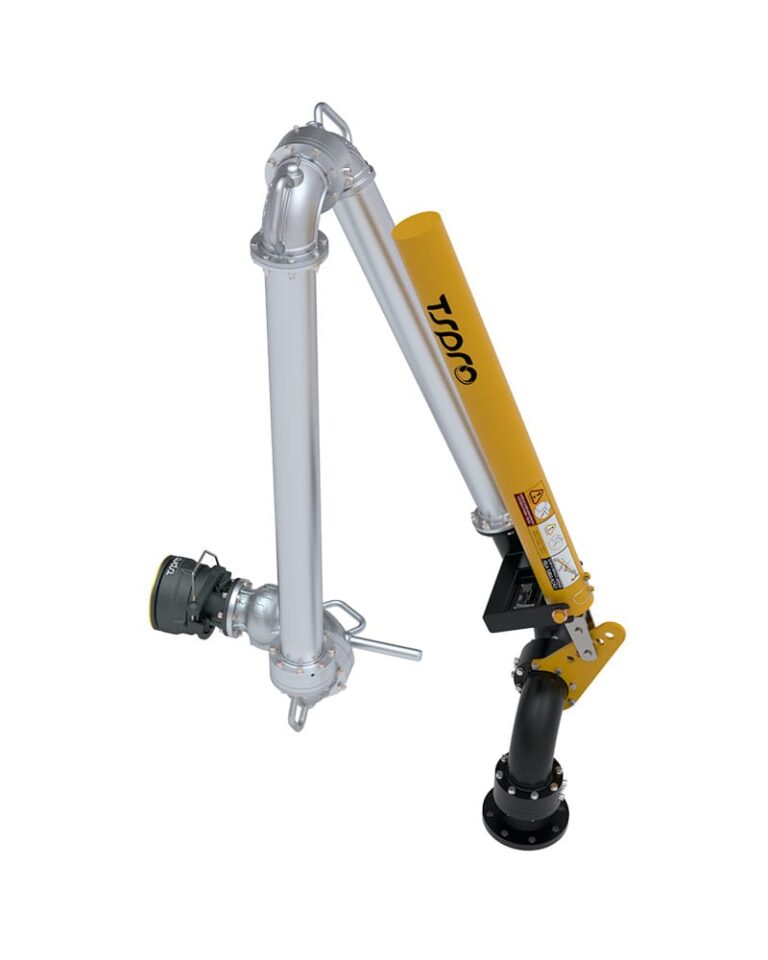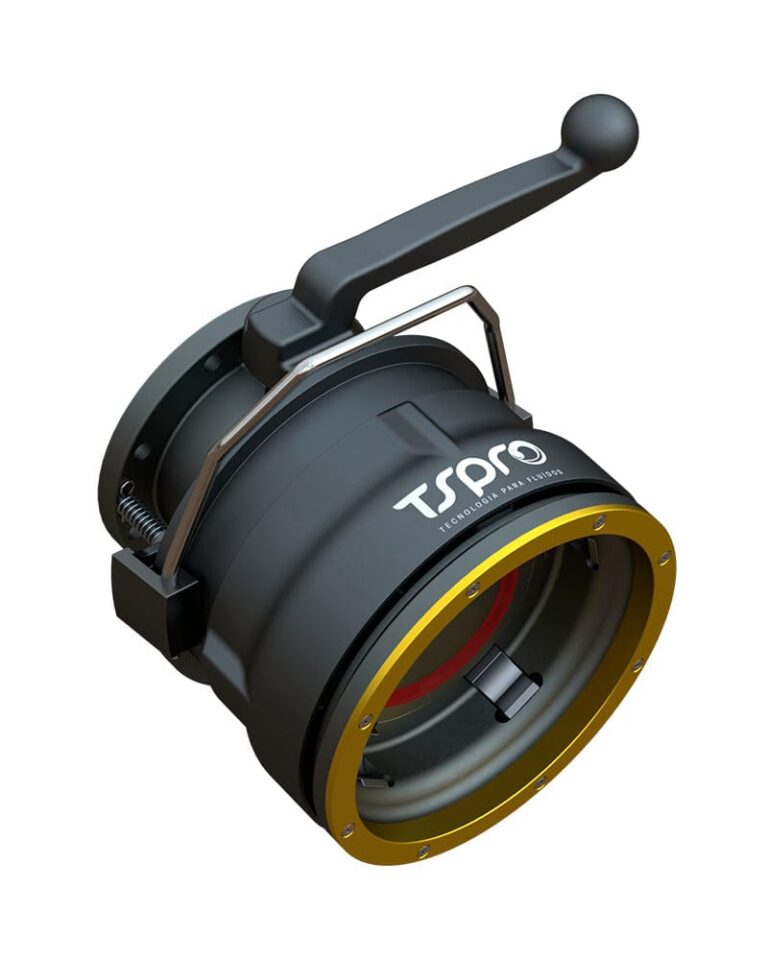


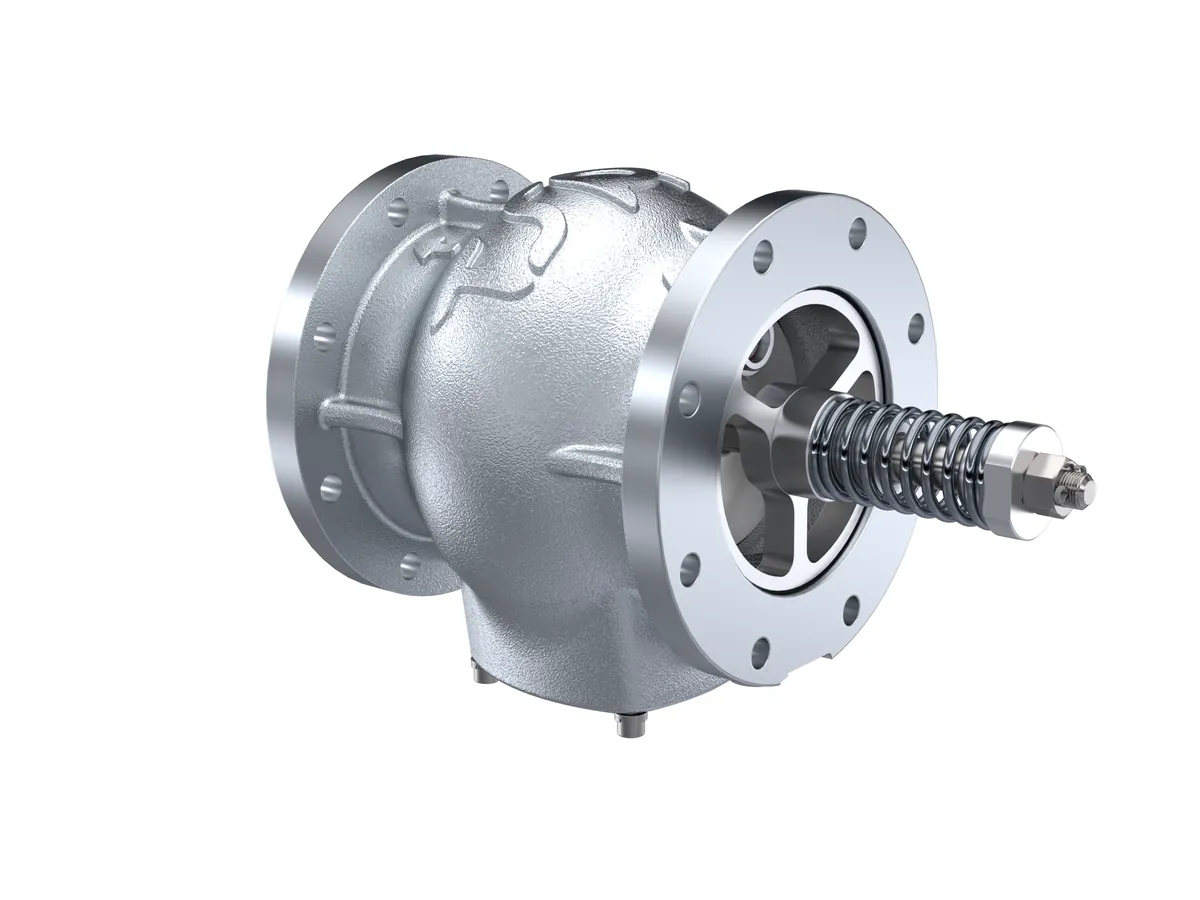
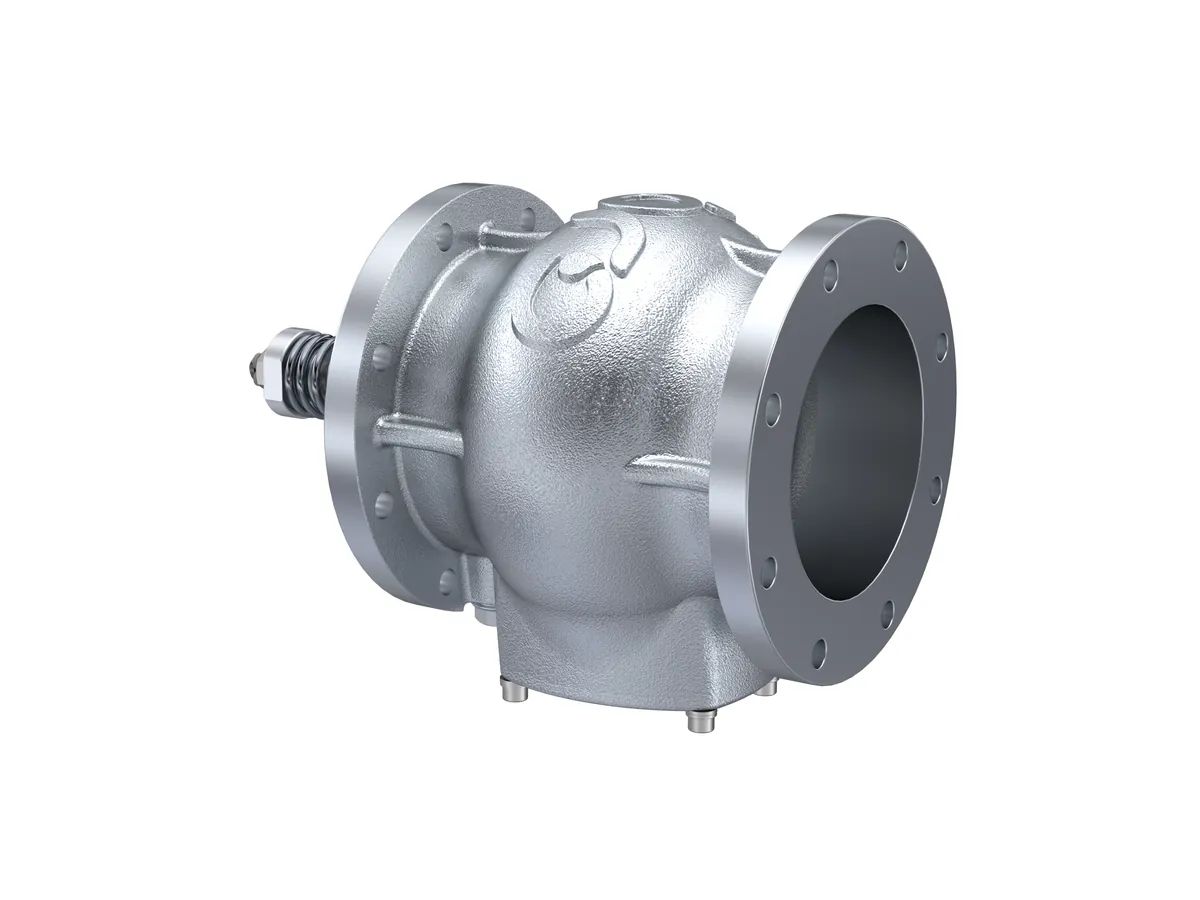
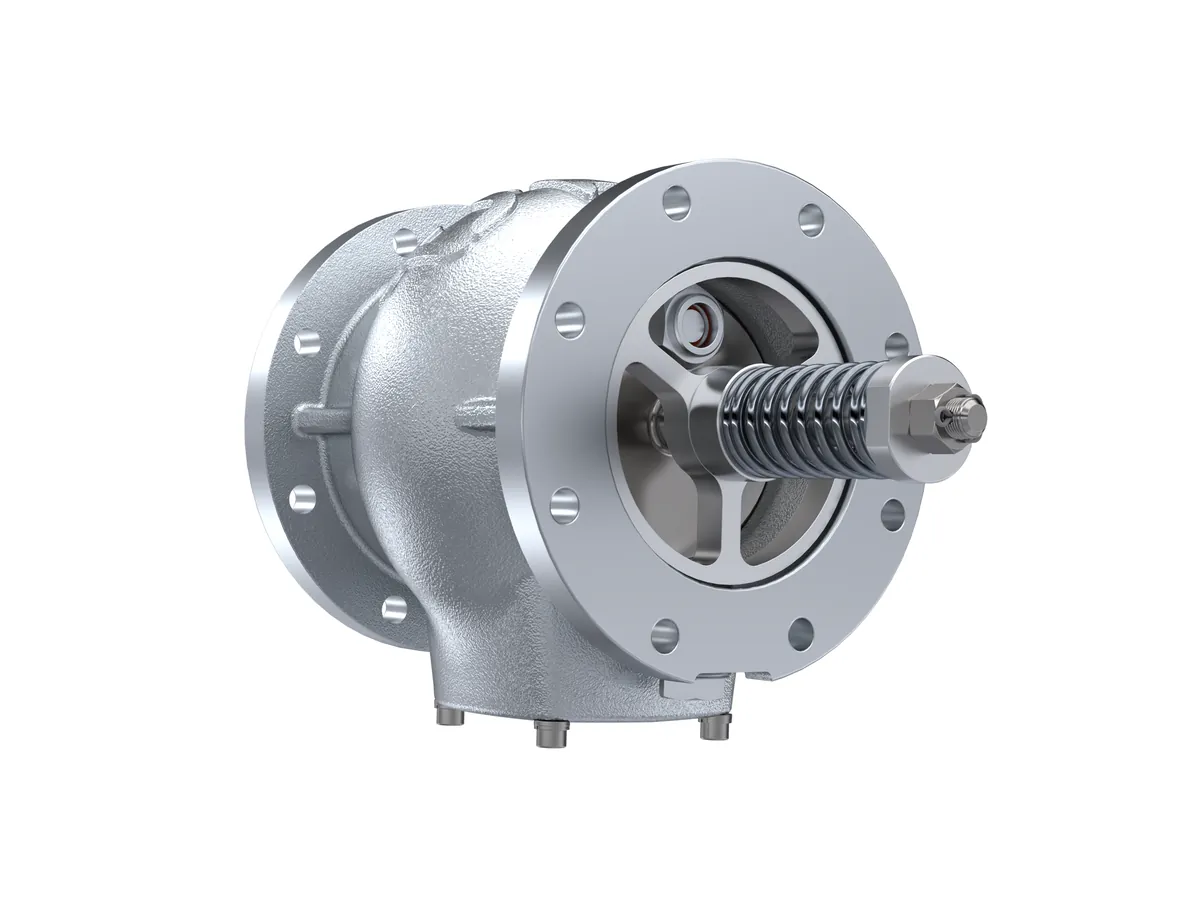
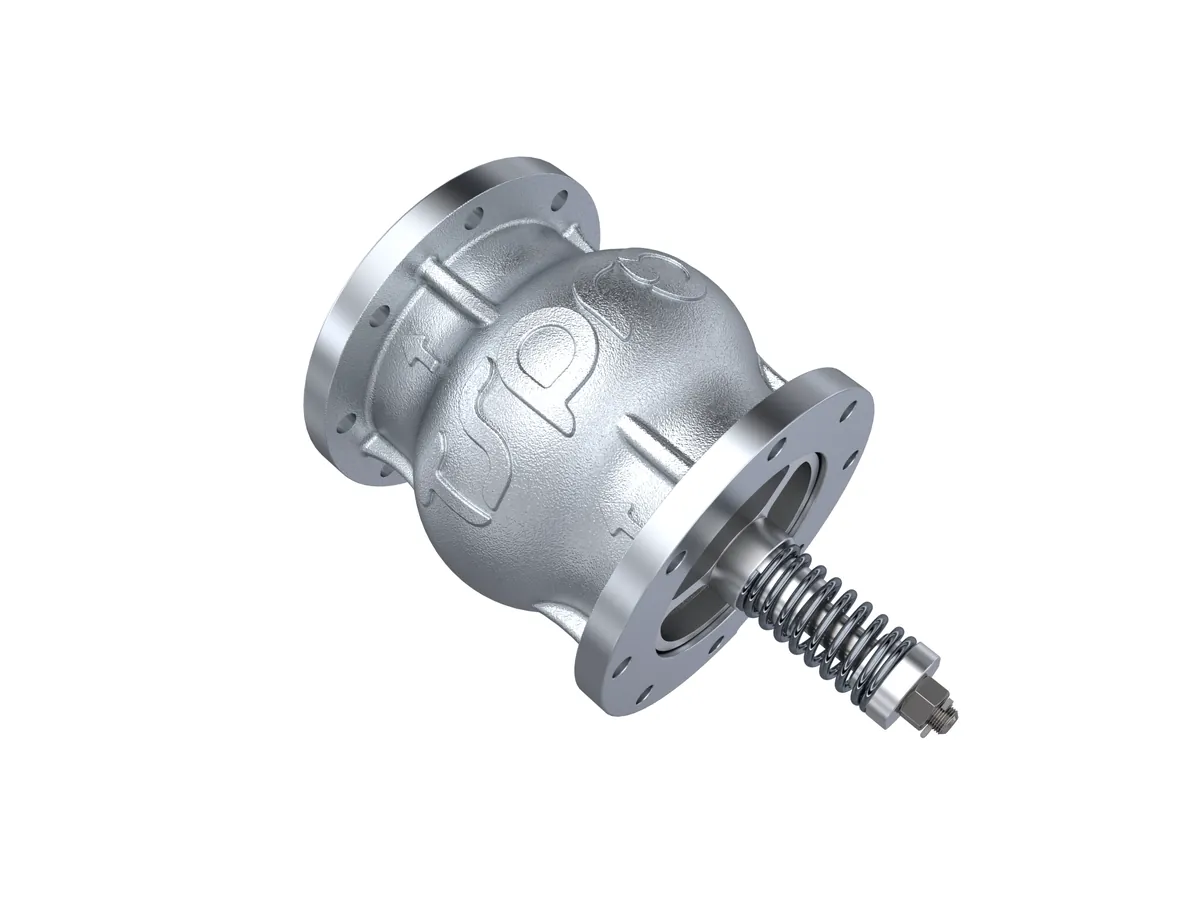
The API TSPRO Check Valve was developed to automatically control the flow of product in loading arms, offering greater safety and practicality to Bottom Loading operations. During loading, the pressure generated by pumping overcomes the spring force and opens the valve automatically. At the end of the operation, the device returns to the closed position and keeps the fluid retained in the vertical section of the arm, even if the API Coupler is opened. This retention facilitates maintenance of the API Coupler, as it avoids the need to drain all the product stored in the vertical section of the equipment before intervention. As a reference, a six-meter section of 4” piping can hold approximately 50 liters. The mechanism also performs an anti-theft function, as the standard 0.3 bar opening requires pumping pressure, making it difficult to improperly remove the product by simply opening the coupler. In certain configurations, the valve can also be used in Top Loading arms without a Deadman quick-closing valve. In this application, it promotes automatic line closure at the end of pumping, helping to reduce evaporation and splashing. Manufactured in a 4” configuration with standard API 1004 TTMA flanges, it has a high-strength aluminum body, internal components in stainless steel and UHMW, and standard Viton A seal. Other materials and pressures can be evaluated according to the fluid and operational characteristics.
It is a 4" valve with standard API 1004 TTMA flanges, with an opening pressure of 0.3 bar (3 mca) and a hydrostatic test at 128 psi (9 kgf/cm²).
The body is made of aluminum, the internals are made of stainless steel, and the standard seal is Viton A. Other materials and opening pressures are available upon request.
Remove the drain plug from the arm, place a container under the flanges, and depressurize the system.
The manual warns that the valve spring is under pressure in the assembly, so the internal components must be loosened carefully.
47 Nm, with gradual and alternating tightening of the screws.
This compresses the seal evenly across the entire diameter. The installation uses two TTMA seals, which are not included with the valve.
| Main application | Bottom Loading Arms |
| Settings | 4" flanged TTMA |
| Connection pattern | API 1004 |
| Materials | Aluminum with stainless steel internals. |
| Seal | Viton A |
| Opening pressure | 0.3 bar |
| Hydrostatic test | 128 psi — 9 kgf/cm² |
Our engineering team provides support from the initial sizing to defining the ideal model