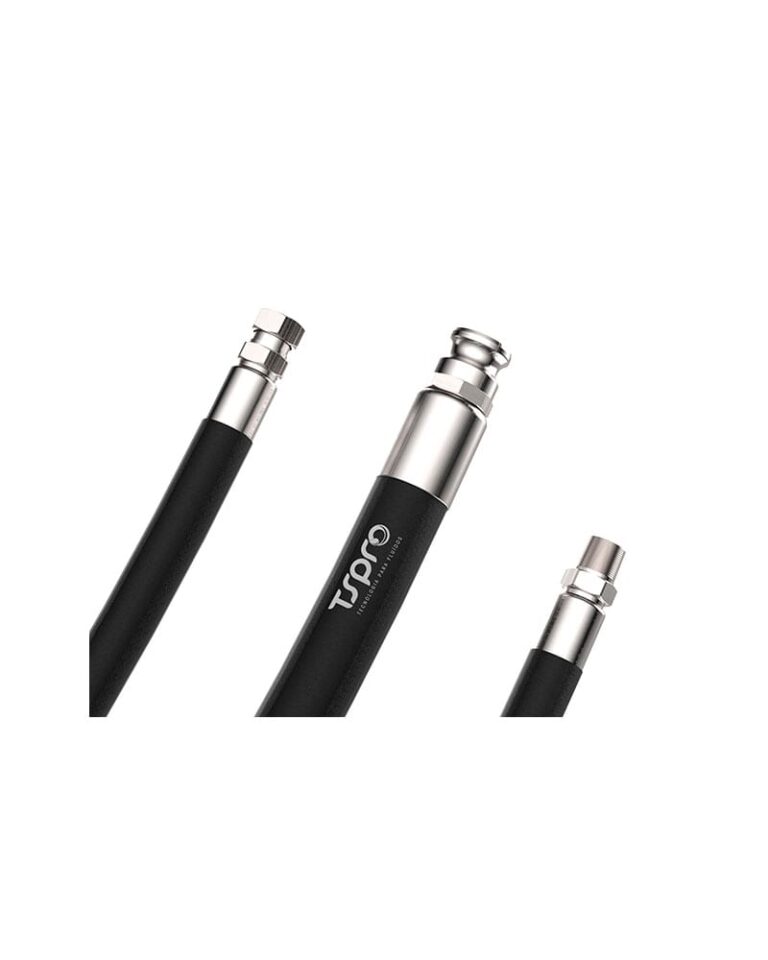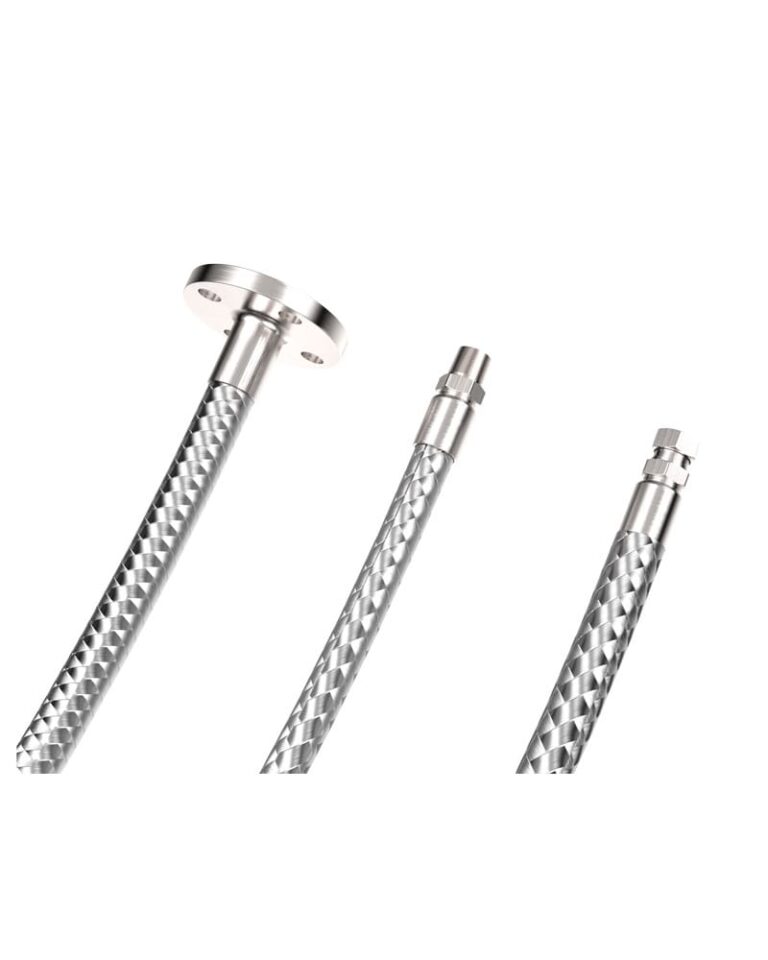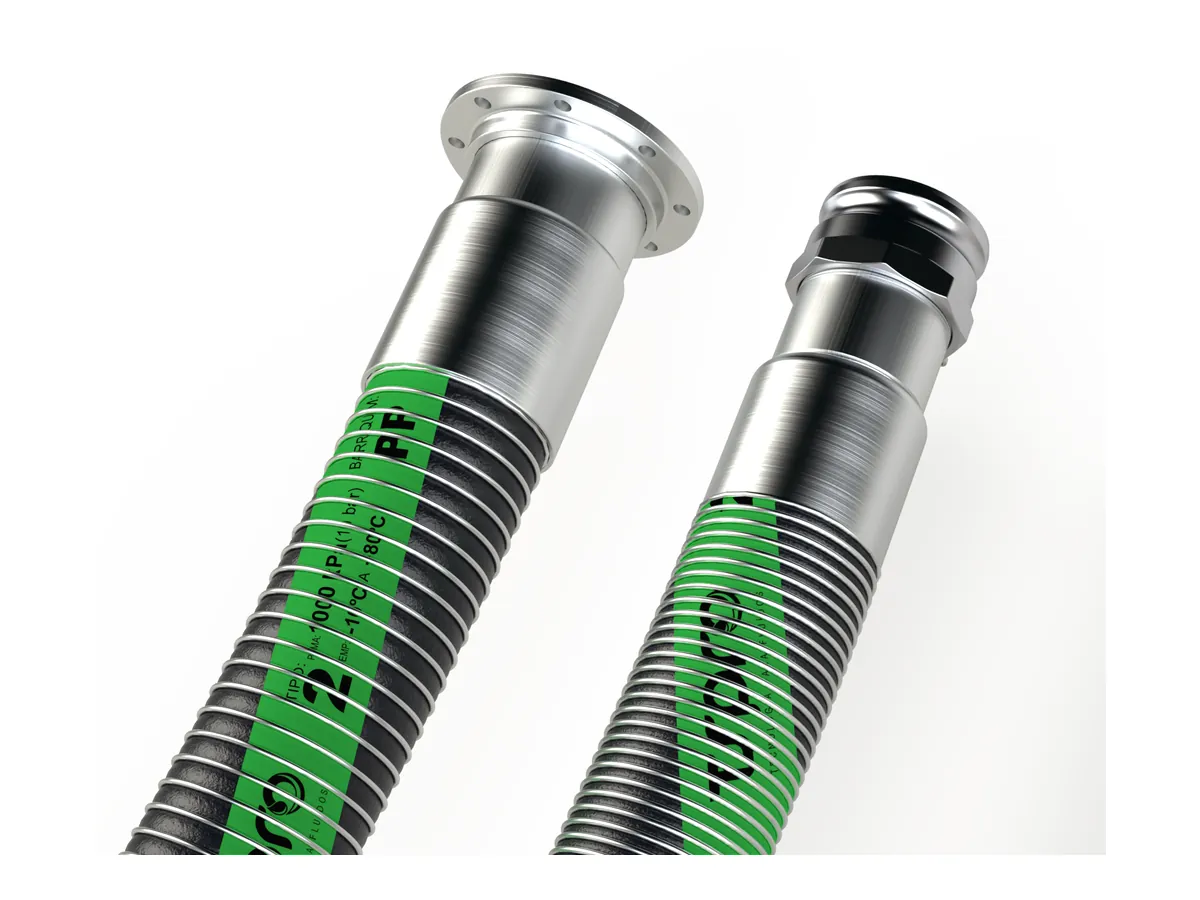
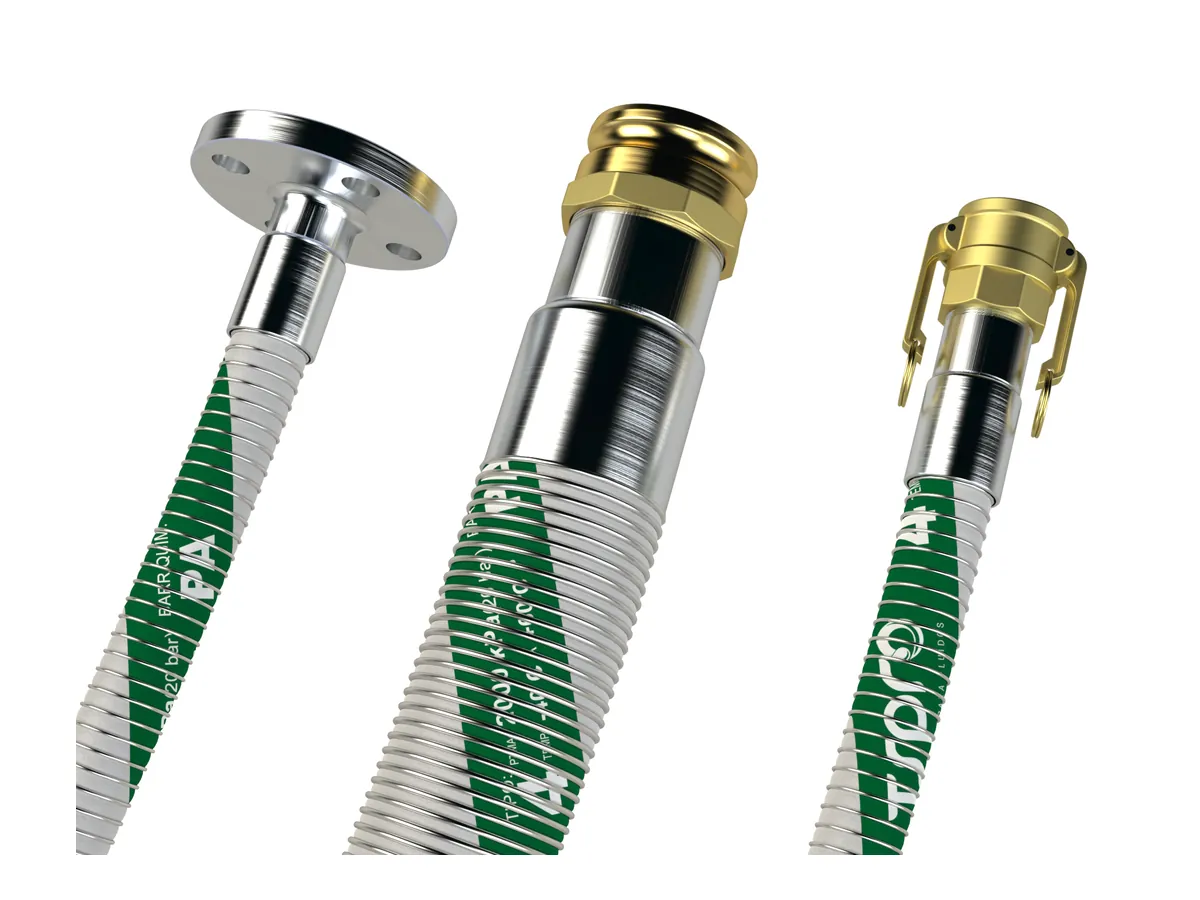
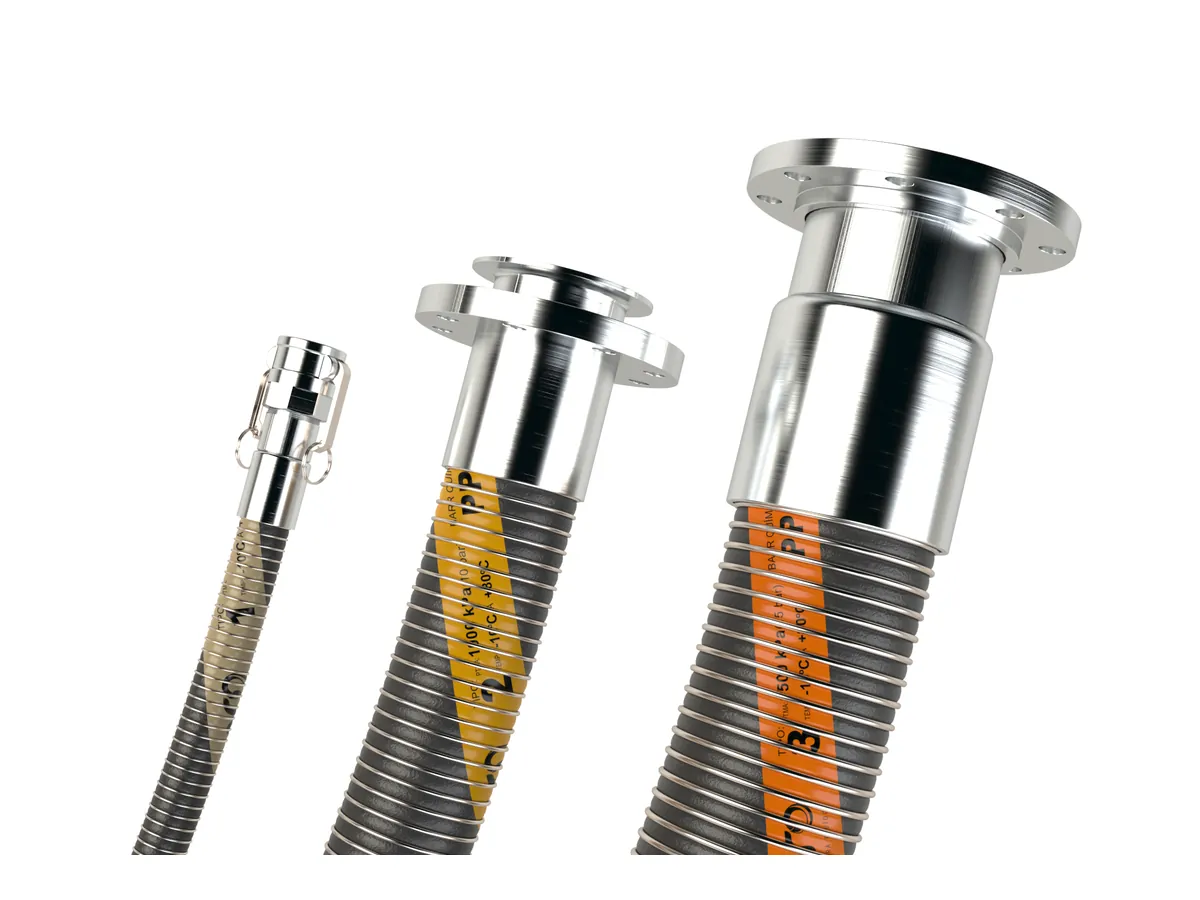
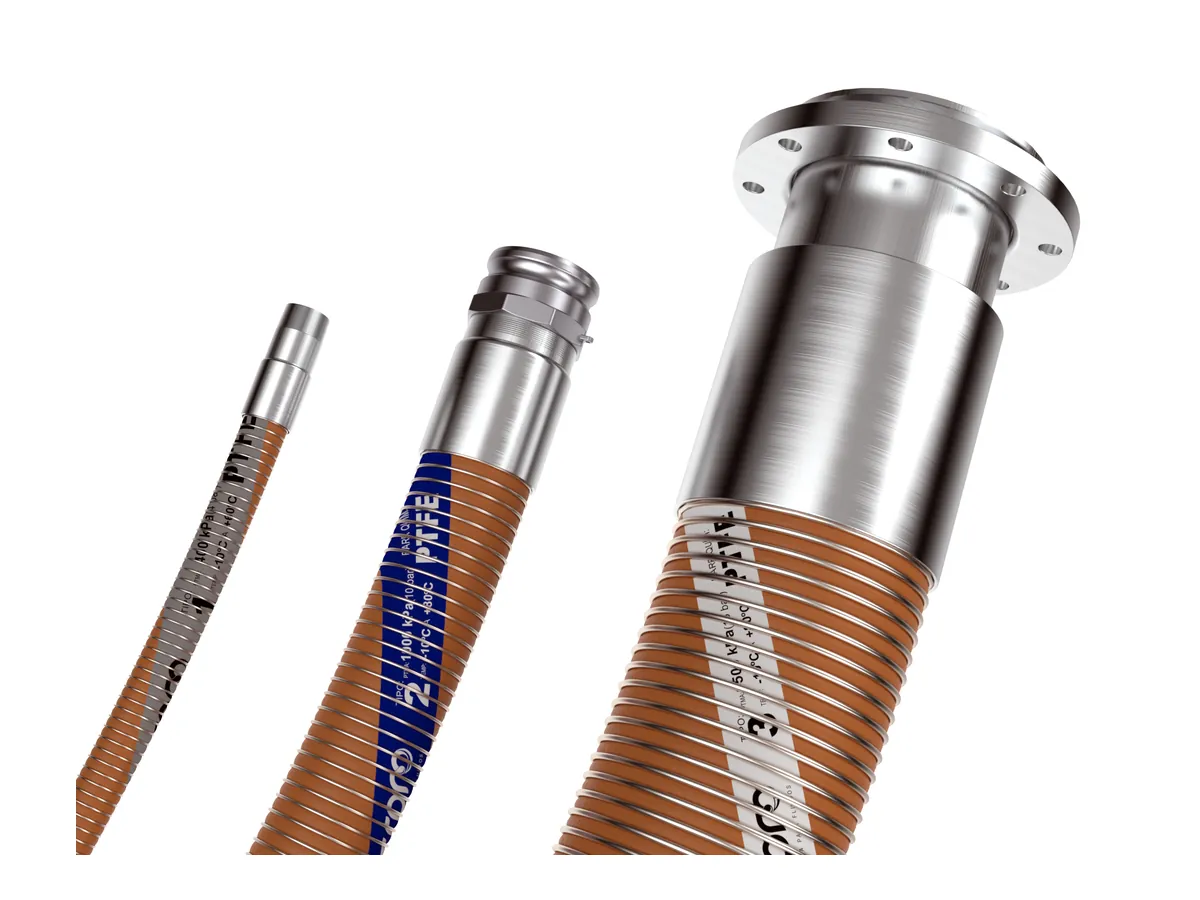
TSPRO Thermoplastic Composite Hoses were developed for the safe suction and discharge of fuels, chemicals, petrochemicals, solvents, liquid fertilizers, and other industrial fluids. Their construction combines different layers of thermoplastic films and metal wires, allowing the hose to be adapted to the chemical compatibility, pressure, temperature, flexibility, and mechanical resistance required by the operation.
The product line caters to applications in trucks and tank wagons, top and bottom loading arms, marine terminals, tank transfers, manifolds, skids, and temporary process lines.
One of TSPRO's main technical differentiators is its direct participation in the development of national regulations: the company drafted ABNT NBR 15690:2021, the Brazilian standard applicable to composite hoses for transferring liquid products. This experience provides in-depth knowledge of the construction requirements, tests, and safety criteria applicable to the product. The hoses are manufactured in Brazil and undergo the tests stipulated in the production stages of ABNT NBR 15690 and EN 13765, according to the assembly specification. Each unit receives individual identification, guaranteeing its traceability throughout its service life. Chemical barriers can be produced in polypropylene, PTFE, polyamide, or anti-stretch polypropylene for bottom- loading applications. In configurations with higher chemical requirements, TSPRO uses a PTFE barrier instead of FEP. The internal and external wires can be specified in AISI 304 or 316 stainless steel, galvanized steel, or polypropylene-coated steel. Terminals, materials, diameter, length, and external coating are defined according to the actual operating conditions. To preserve the safety and reliability of the assembly, pressure, temperature, and minimum bending radius limits must be respected, in addition to carrying out the periodic inspections indicated by ABNT NBR 15690.
P – PP – (Polypropylene)
T – Teflon (PTFE)
N – Nylon (Polyamide)
L – Anti-stretch Polypropylene for BOTTOM LOADING
The classification of NBR 15690 and EN 13765 defines four types, with a maximum working pressure of 4 to 20 bar.
Type 1: 400 kPa (4 bar). Type 2: 1,000 kPa (10 bar). Type 3: 1,500 kPa (15 bar). Type 4: 2,000 kPa (20 bar). The test pressure is 1.5 times the working pressure, and the minimum burst pressure is 4 times the working pressure. The temperature range also varies by type and is listed in the catalog.
For 2", the minimum radius is 200 to 225 mm; for 3", 280 to 300 mm; for 4", 400 mm.
The weight per meter, without the terminals, is approximately 2.08 kg (2"), 3.52 kg (3") and 5.06 kg (4"). Respecting the minimum radius avoids stresses and deformations that reduce the service life.
The barrier can be made of polypropylene, PTFE, or polyamide (nylon), and the choice depends on the fluid.
For example, for gasoline, the catalog classifies PTFE as excellent, polyamide as excellent up to 48°C, and polypropylene as reasonable. The catalog includes a table with dozens of fluids. If in doubt, inform TSPRO engineering before specifying the fluid.
All TSPRO composite hoses undergo production tests according to NBR 15690 and EN 13765, and operational tests follow customer standards.
Operational tests typically include visual inspection, electrical resistance testing, pressure testing, and elongation testing, performed by qualified professionals. Always check the hose's expiration date.
Tighten threaded connectors by the body of the terminal, never by the cap, and hoist the hose at least three points when connecting to ships or when cantilevered.
Avoid dragging the hose across sharp surfaces. After use, completely drain the fluid and store it on a platform, ensuring it doesn't sag and that the fittings are protected. When welding nearby, disconnect or isolate the hose from the line.
| Application | Suction and discharge of industrial fluids |
| Reference standards | NBR 15690:2021 / EN 13765 / BS 1765 |
| Available diameters | ¾" to 8" |
| Chemical barriers | PP, PTFE, polyamide (PA) or anti-stretch PP |
| Construction classes | Types 1, 2, 3 and 4 |
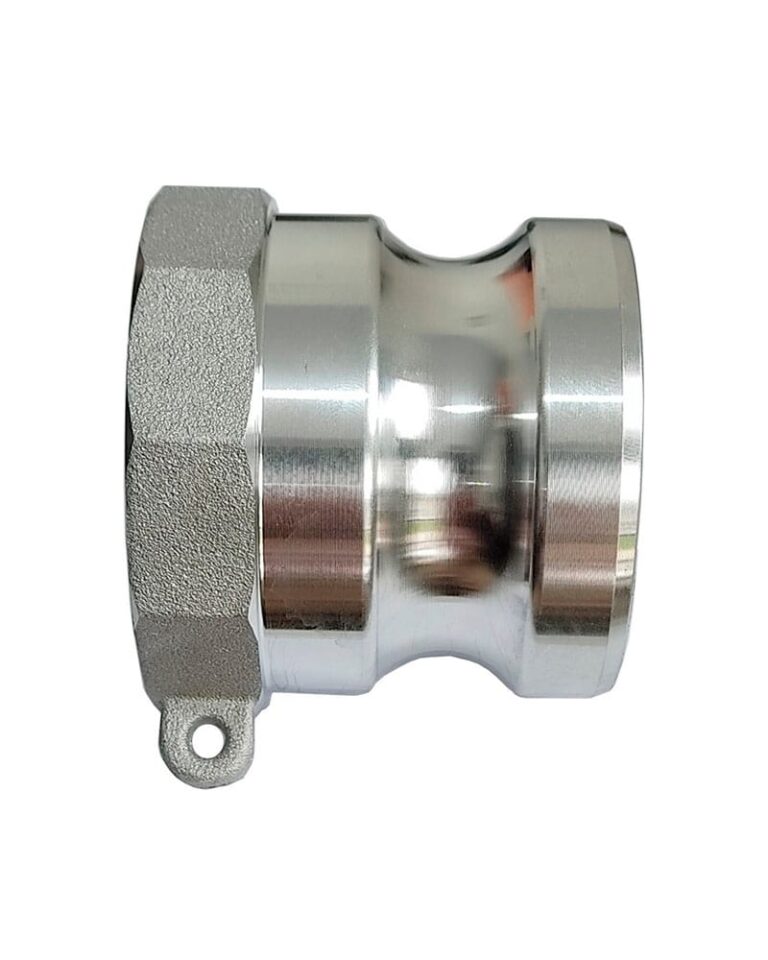
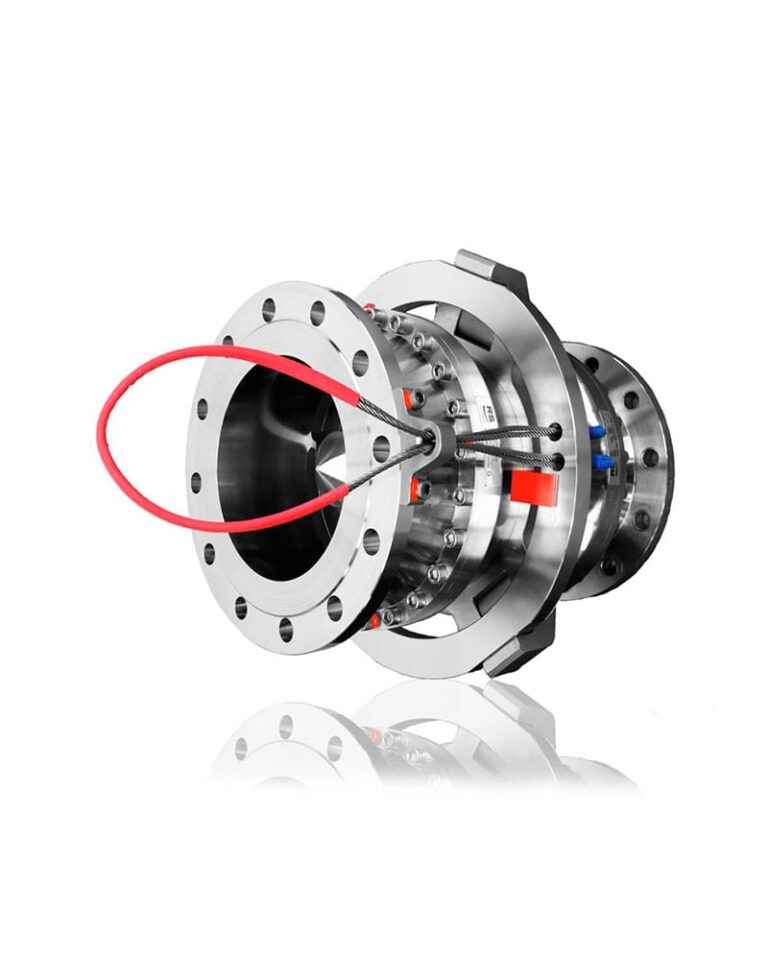
| Terminals | Customizable |


← Swipe to the side if needed
Our engineering team provides support from the initial sizing to defining the ideal model