

Breakaway Valves
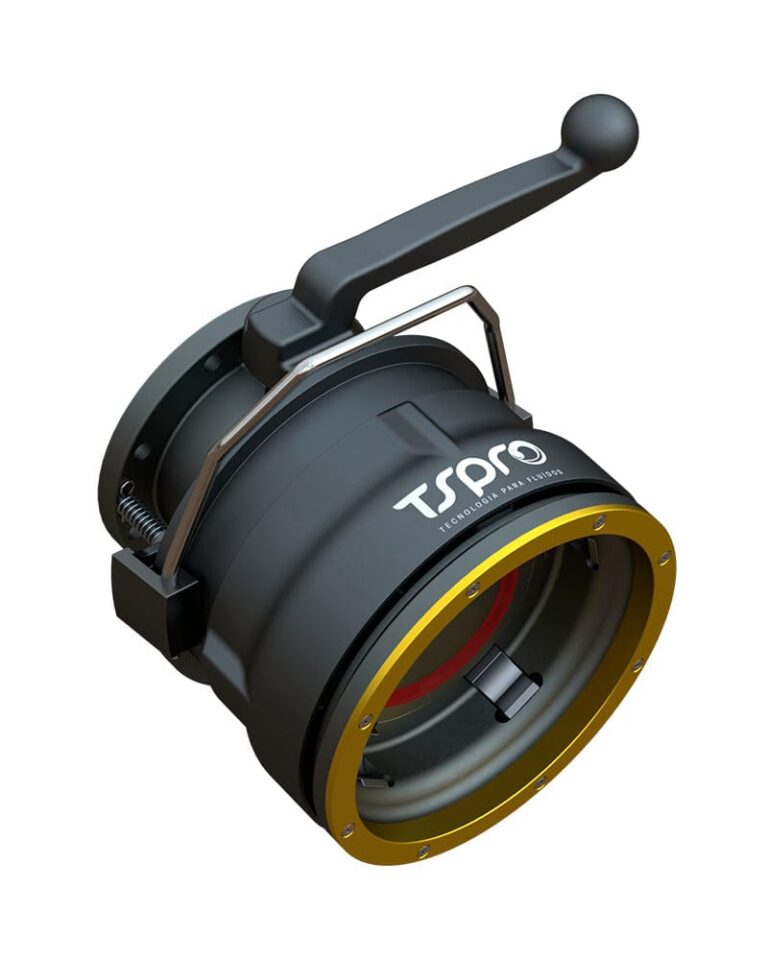
The Breakaway Safety Valve is a device installed in loading and unloading lines to protect hoses, loading arms, pipes, and other components from damage caused by accidental movement. When the tensile force applied to the line exceeds the predefined value for operation, the device separates at a controlled point. This separation relieves stress on the system before the hose or other component ruptures. During decoupling, internal valves automatically close both ends of the line, interrupting flow on the upstream and downstream sides. This operation significantly reduces the amount of product released, protecting the operator, the environment, and the installation's assets. The solution is suitable for industrial and maritime liquid transfer operations, including loading and unloading tank trucks, railcars, barges, and ships. The configuration must be sized considering the fluid, pressure, flow rate, connections, and separation load appropriate to the system.
The axial breaking force is 1,250 kgf and the radial force (at 90 degrees) is 2,500 kgf.
The shear pins have predetermined loads and, upon breaking, the internal springs immediately move the poppets, sealing both sides. Replacement is done by swapping the pins.
The maximum flow rate is 130 m³/h (2,170 liters per minute), for a maximum working pressure of 5 bar.
The body is made of aluminum, the internals are stainless steel, and the seal is Viton A. The 4" version has TTMA flanges.
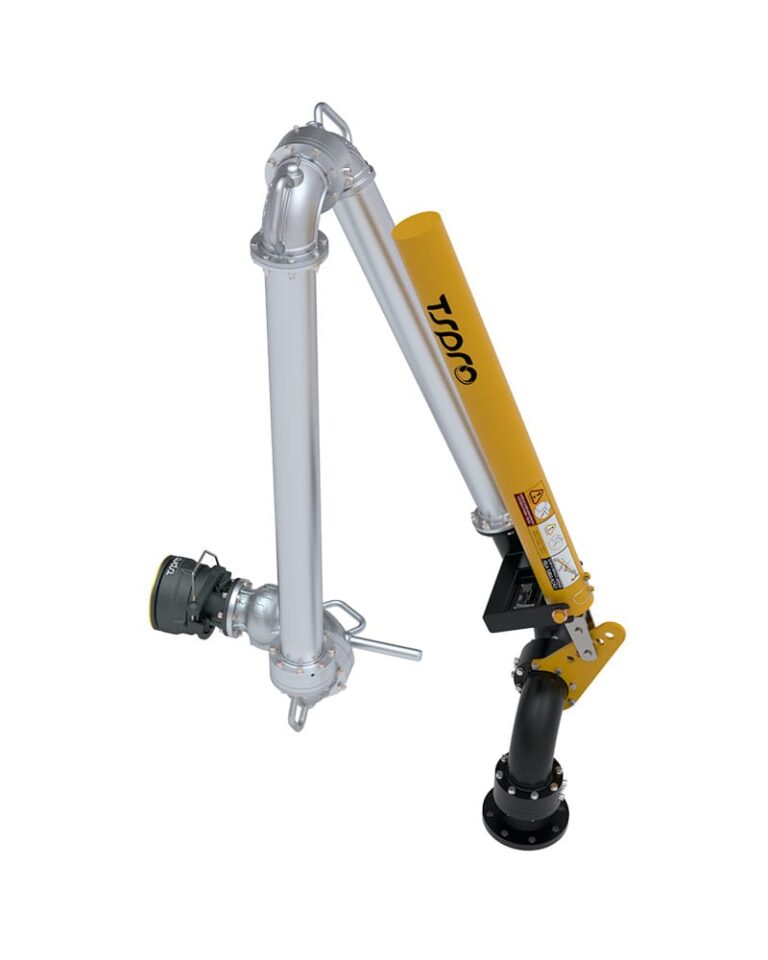
In bottom loading, between the API coupler and the arm piping; in top loading, on the dip tube.
For bottom loading, the model is BW-P-TT-040-2A and, in case of truck movement, it disconnects, sealing both sides of the line. For top loading, the model is BW-P-TT-040-2A-SI, without the internal sealing parts, which protects the line and the tank truck.
| Function | Protection against accidental pulling and displacement. |
| Activation | Separation upon reaching predetermined load. |
| Closing | Automatic on both sides |
| Applications | Industries, terminals and maritime operations |
| Installation | On loading and unloading lines |
| Gauges and materials | According to the project and the fluid transferred |
Our engineering team provides support from the initial sizing to defining the ideal model