


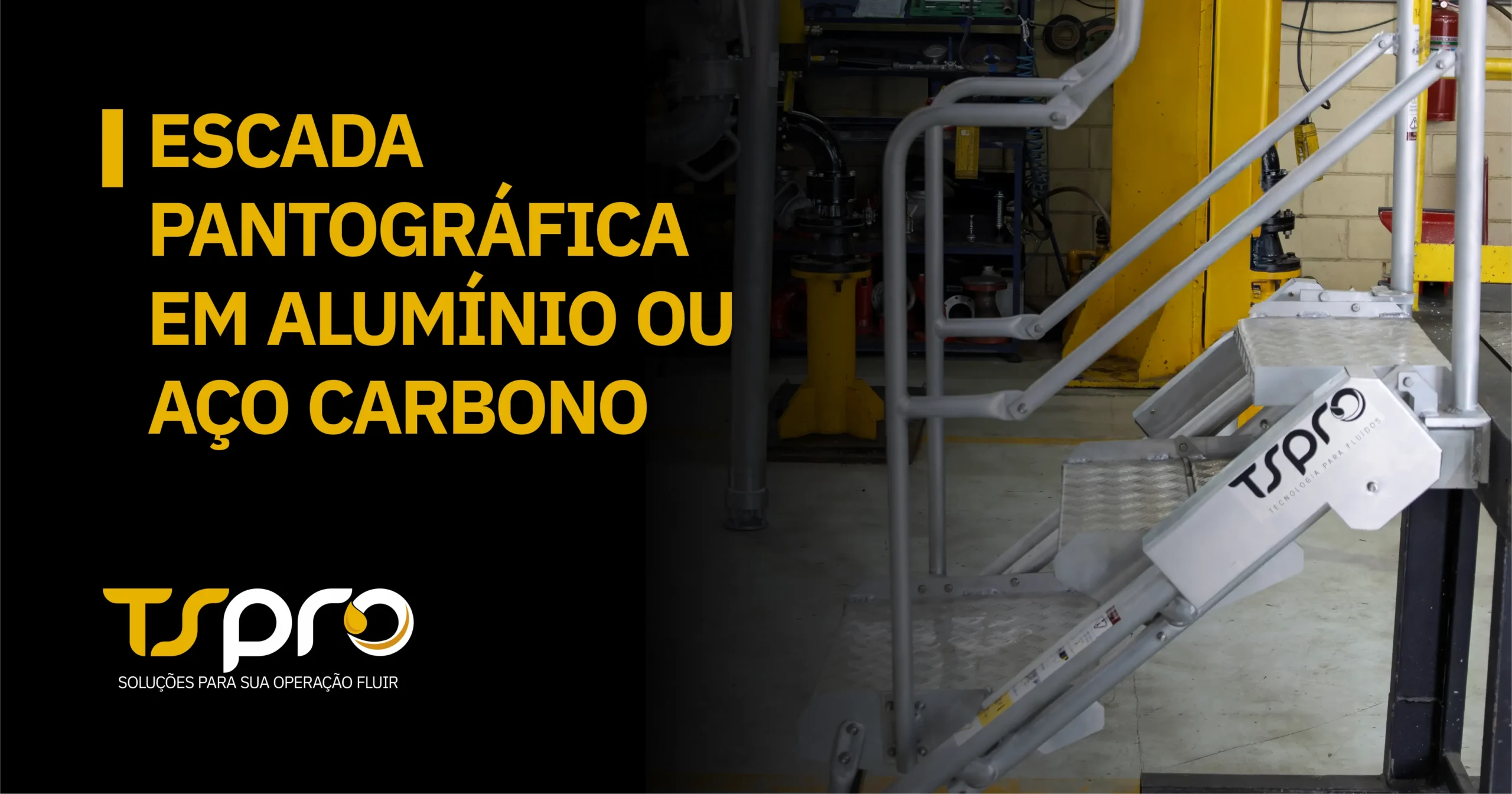
Pantograph ladder in aluminum or carbon steel: how to reduce corrosion, maintenance and operating costs.
When the choice of a scissor lift is made solely based on initial price, the operation risks ignoring what truly matters in its use: corrosion, maintenance needs, ergonomics, lifespan, and predictability. In critical processes, the problem isn't just buying an access solution. The problem is living with a solution that requires more intervention, ages faster, or generates constant friction in the operational routine. That's why the debate between aluminum and carbon steel shouldn't be a simple material comparison. It needs to be treated as an engineering decision.
Why does the choice of material have such a significant impact on the total cost?
In many industrial assets, the initial investment represents only a portion of the cost. The most significant impact appears during use: environmental exposure, frequency of intervention, durability, operational effort, and performance stability over time. In the case of a scissor lift, this is even more evident because the application environment can accelerate wear, compromise the structure, and increase maintenance needs. A seemingly cheaper piece of equipment can become more expensive when it transfers to operation the problems that were not addressed in the choice of material and the design logic.
Where carbon steel typically loses competitiveness
Carbon steel can meet certain application needs, but it tends to lose efficiency when the environment demands greater corrosion resistance and longer-term predictability. This scenario is particularly pronounced in loading docks, terminals, railway operations, and humid or salty environments. The consequence is increased wear, greater need for maintenance, more frequent interventions, and reduced operational stability. This cost is often silent; it goes beyond the commercial proposal and becomes part of the plant's routine.
What does aluminum change in practice?
When a pantograph ladder is constructed from aluminum, its operation tends to benefit in three main areas: corrosion resistance, ergonomics, and predictability. The first is reduced exposure to structural degradation in harsh environments. The second is its lightness, which reduces handling effort and improves the operational experience. The third is reduced maintenance pressure, as the solution tends to require fewer interventions related to the material's behavior in the environment. In other words, aluminum should not be seen merely as a construction alternative; it should be understood as a performance choice.
Safety also changes with the right specification.
Another common mistake is treating safety as a separate issue from material selection and design. In practice, safety depends on the whole package: structure, stability, flooring, crush protection, vehicle contact, grip during use, and suitability for the application. If the solution requires more effort, ages worse in the environment, or generates constant friction in daily routines, this impact is also operational and is also a safety issue.
The most important argument: total cost of operation.
The right question isn't simply "which solution costs less to buy?". The right question is: which solution generates the lowest accumulated cost over time? When factors such as corrosion, intervention time, maintenance frequency, ergonomics, and availability are taken into account, the analysis tends to favor the solution with the best performance in the field. That's why reading the TCO (Total Cost of Ownership) makes more sense than a superficial price comparison.
What to consider before installing or replacing a scissor lift.
Before buying, standardizing, or replacing a pantograph ladder, it's worth reviewing a few questions:
- Does the environment accelerate corrosion and wear?
- Does the current equipment require frequent maintenance?
- Does the routine use generate excessive strain?
- Does the current structure adequately address the critical nature of the operation?
- Was the solution designed specifically for the application, or was it simply chosen because it was available?
- Does the current material help to gain predictability or does it only solve the basics?
When these answers are unclear, the problem isn't just commercial. It's a specification issue.
Conclusion
The choice between aluminum and carbon steel should not be treated as a catalog comparison. It should be understood as a decision that impacts safety, maintenance, ergonomics, and the real cost of operation. When the specification considers the environment, frequency of use, criticality, and the need for predictability, the operation moves beyond simply buying a piece of equipment and begins to structure a more coherent solution.
Do you want to review whether your current solution makes sense for your environment and the criticality of your operation? Talk to the TSPro team and request a technical analysis of your application. Speak with a specialist: https://tspro.com.br/contato/ Visit the product page: https://tspro.com.br/produtos/escada-pantografica/